Invited Speaker Ⅰ
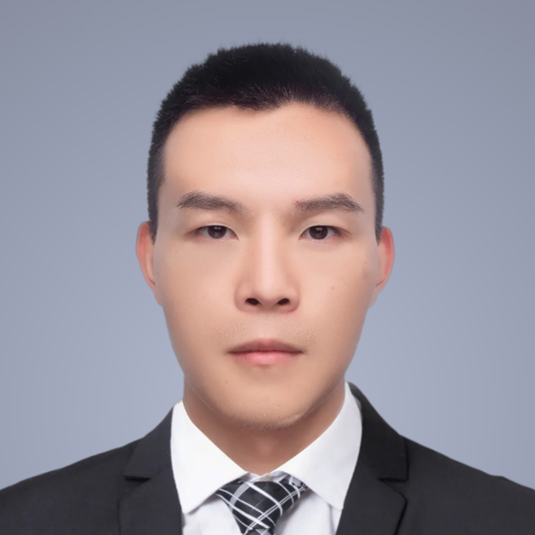
Jin Jiang
Biography: TBD
Speech Title: TBD
Abstract: TBD
Invited Speaker Ⅱ
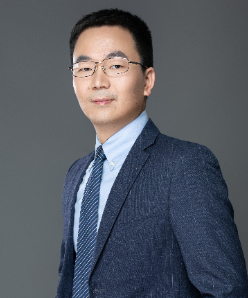
Yonggang Liu
Chongqing University, China
Biography: TBD
Speech Title: TBD
Abstract: TBD
Invited Speaker Ⅲ
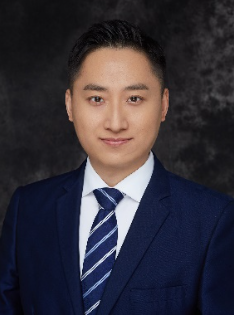
Lei Zhang
Beijing Institute of Technology, China
Biography: TBD
Speech Title: TBD
Abstract: TBD
Invited Speaker Ⅳ
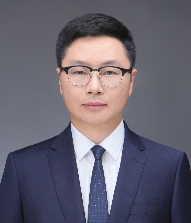
Yafei Wang
Shanghai Jiao Tong University, China
Biography: TBD
Speech Title: TBD
Abstract: TBD
Invited Speaker Ⅴ
Guoqiang Mao
Southeast University, China
Biography: TBD
Speech Title: TBD
Abstract: TBD
Invited Speaker Ⅵ
Lili Lu
China Society of Automotive Engineers, China
Biography: TBD
Speech Title: TBD
Abstract: TBD
Invited Speaker Ⅶ

Jie Bai
Hangzhou City University, China
Biography: Professor Jie Bai, a foreign academician of the Russian Academy of Engineering, holds multiple important positions, including director of the Intelligent Transportation Engineering Research Center at Zhejiang University City College, and key roles in professional associations like CAAE and CAAI. Since 1996, he has engaged in smart sensors, multi-sensor fusion and intelligent driving R&D in multinationals, central enterprises and universities, working at Hitachi Automotive, Delphi, etc. He has led over 30 national and enterprise major projects, published over 50 papers, obtained more than 20 invention patents, and won many honors such as Jiangsu Innovation and Entrepreneurship Talent, Provincial Science and Technology Progress First Prize. In 2023, his team’s project won CAAE Science and Technology Progress Second Prize.
Speech Title: 4D imaging millimeter-wave radar and multi-sensor fusion technology
Abstract: 2025 is a critical turning point for the industry, shifting from "reckless growth" to "refined cultivation". Leading enterprises adopt differentiated competition, with 4D imaging millimeter-wave radar accelerating technological upgrading. This radar adds height detection to traditional 3D functions, enabling accurate target sensing. Multi-sensor fusion enhances system decision reliability. Focusing on commercial vehicle electrification, the sharing covers over 20 years of innovation, from DHT systems to Auto Informatics (AuI). The innovative DHT fits heavy-duty trucks well, while AuI bridges vehicle data "meaning gap". It envisions next-gen commercial vehicle propulsion systems via architecture innovation and AI, integrating clean fuels and DHC engines to decarbonize heavy transport.
Invited Speaker Ⅷ

Haiping Du
University of Wollongong, Australia
Biography: Professor Haiping Du, received the PhD degree in mechanical design and theory from Shanghai Jiao Tong University, Shanghai, China, in 2002. He was a Research Fellow with the University of Technology, Sydney, from 2005 to 2009, and was a Postdoctoral Research Associate with Imperial College London. He is a professor at the School of Electrical, Computer and Telecommunications Engineering, University of Wollongong, Australia, since 2016. He is a Subject Editor of the Journal of Franklin Institute, an Associate Editor of IEEE Transactions on Industrial Electronics and IEEE Control Systems Society Conference, an Editorial Board Member for some international journals, His research interests include vibration control, vehicle dynamics and control systems, robust control theory and engineering applications, electric vehicles, robotics and automation, smart materials and structures.
Speech Title: From Electromagnetic to Electrically Interconnected: Intelligent Suspension Control for Future Mobility
Abstract: Electrically Interconnected Suspension (EIS) systems represent a paradigm shift in vehicle dynamics and ride control. By leveraging electrical energy transfer between suspension units, EIS enables force balancing, improved energy efficiency, and enhanced ride comfort without the complexity of hydraulic circuits. Building on recent research in controllable electromagnetic dampers and interconnected suspension systems, this keynote will explore the principles and advantages of EIS compared to traditional and hydraulically interconnected systems. Key topics include the working principle of controllable electromagnetic dampers, EIS architecture, electrical network design, and advanced suspension control algorithms. Intelligent control strategies will be discussed, drawing on experimental and simulation studies from our published work. These studies demonstrate how EIS contributes to next-generation mobility, supporting autonomous driving and sustainable transportation. Finally, future research directions will be highlighted, focusing on cooperative control for connected vehicles and the role of EIS in electrified platforms.
Invited Speaker Ⅸ
Wei Gao
University of New South Wales, Australia
Biography: Professor Wei Gao is Deputy Director of China Affairs at UNSW Sydney’s Faculty of Engineering, Professor and doctoral supervisor at its School of Civil and Environmental Engineering. He has long focused on mechanical/structural dynamics, uncertainty analysis, safety assessment, etc. He led 10 ARC-funded projects, proposed multiple innovative methods (e.g., hybrid random interval fields) and established corresponding solution systems, providing safety/reliability bounds for composite materials and complex structures. He has published over 200 SCI papers (over 4,000 citations), holds one Australian patent (2019100622), with findings applied in multiple engineering fields. Currently, he serves as Associate Editor/Subject Editor/editorial board member for several top journals like Engineering Structures (CAS Q1) and Computer Methods in Applied Mechanics and Engineering (CAS Q1).
Speech Title: Integrated experimental-numerical-virtual modelling technique
Abstract: This study presents a comprehensive framework that integrates experimental, numerical, and virtual modelling techniques. The framework is designed to leverage the full potential of machine learning technologies and computational mechanics, utilizing experimental data to address complex engineering challenges in a practical and effective manner. The research focuses on two critical engineering issues: stochastic response of composite structures under low/high velocity impacts and inverse-based stochastic prediction of structural elastoplastic behaviour. The integration of experimental, numerical, and virtual techniques within this framework demonstrates its potential to provide a more robust, efficient, and thorough approach to research and development. By leveraging the strengths of each method, this integrated approach enhances the accuracy of results and optimizes the efficiency of the design and analysis processes.
Invited Speaker Ⅹ
Xubin Song
Zhejiang University of Science and Technology, China
Biography: Professor Song Xubin, Zhejiang University of Technology (2023-present), Fellow of the American Society of Mechanical Engineers (ASME) (2013), Distinguished Expert of the National Thousand-Person Plan (2016), Founding Editor-in-Chief of the International Journal of Powertrains (2010-present), indexed by EI (2022). He previously served as the Chief Engineer of Eaton, a Fortune Global 500 company. Over the past two decades, his research and development focus has primarily been on advanced technologies for automotive chassis systems and commercial vehicle powertrain systems, which have been industrialized. He has obtained more than 10 patents and over 50 innovative inventions. To date, he has published more than 60 academic articles, approximately two dozen journal papers, and given over 30 invited presentations at universities and industrial circles across the United States, China, Australia, Singapore, and other regions. He received the Best Paper Award at the 2010 ASME Annual Meeting.
Speech Title: AI-Powered Powertrains for Commercial Vehicles: Evolution from DHT Innovation to Auto Informatics
Abstract: With the rapid electrification of transportation, heavy-duty trucks face unique challenges in powertrain electrification, including charging infrastructure limitations and battery performance constraints. This presentation shares over two decades of industrial innovation experience, focusing on the evolution from Dedicated Hybrid Transmission (DHT) systems to the emerging discipline of Auto Informatics (AuI). The discussion begins with an innovative DHT design based on a compound gearbox architecture, which eliminates torque interruption in hybrid systems and enhances fuel economy through engine downsizing. Prototype validation demonstrates its effectiveness for heavy-duty trucks. Furthermore, the presentation introduces Auto Informatics—an ontology-based approach that bridges the “meaning gap” in vehicle data—enabling semantic digital twins, intelligent self-diagnosis, and accelerated AI-driven innovation of life-cycle technologies. The talk concludes with a vision for next-generation intelligent propulsion systems for commercial vehicles powered by architecture innovation and AI: by integrating clean alternative fuels and dedicated hybrid cycle (DHC) engine technology, this holistic framework offers a viable promising path toward decarbonizing heavy-duty transport.
Invited Speaker XI
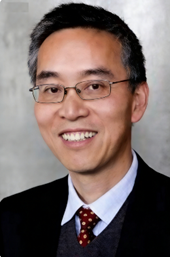
Weixiang Shen
Swinburne University of Technology, Australia
Biography: Professor Weixiang Shen received his BEng., MEng., and PhD degrees all from Electrical Engineering. He is a Professor at School of Engineering, Swinburne University of Technology, Melbourne, Australia. Professor Shen’s research interests are (1) battery applied research and control strategy for electric vehicles (EVs), including battery capacity estimation, battery charging, battery sorting and balancing, end of life battery repurposing, battery fault diagnosis, battery safety under impact, battery energy and thermal management as well as EV control, (2) integration of EVs and renewable energy systems (e.g. solar photovoltaic systems and wind systems) into power grids, including the smart use of EV batteries as an energy storage system in power systems (e.g. smart grid) and the analysis and improvement of system stability for power systems integrated with renewable energy systems. In these areas, he has published more than 150 journal papers, one monograph "Advanced battery management technologies for electric vehicles" and a few book chapters. Professor Shen is an Associate Editor of IET Power Electronics, Editor Board Member of Journal of Energy Storage and founding Board Member of journal Vehicles, etc.
Speech Title: Advanced Battery Management for Electric Vehicle Integration into Smart Grids: Challenges and Solutions
Abstract: With the rapid growth of the electric vehicle (EV) industry and smart grid expansion, integrating EVs into smart grids has emerged as a critical pathway to energy transition and carbon neutrality, yet it faces technical hurdles in battery management and grid coordination. This presentation addresses key bottlenecks, including low-accuracy battery state estimation, difficulties in charge-discharge control, poor grid stability, and inadequate fault diagnosis. It proposes an advanced model-data fusion Battery Management System (BMS) that leverages machine learning to enhance online estimation of battery capacity and State of Health (SOH), while reducing model complexity and computational costs. The talk further explores collaborative scheduling between EVs and renewable energy sources, highlighting how Vehicle-to-Grid (V2G) technology optimizes grid load, boosts renewable energy absorption, and strengthens system resilience. Finally, it envisions a future where advanced battery management and intelligent control drive deeper EV-grid integration, offering a viable path to accelerate low-carbon transformation in transportation and energy sectors.
Invited Speaker XII
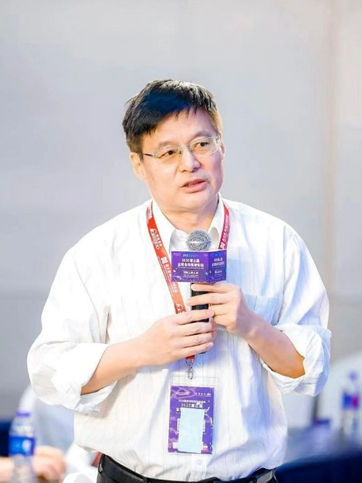
Jiyong Gao
Fuyao University of Science and Technology, China
Biography: TBD
Speech Title: TBD
Abstract: TBD