Keynote Speaker Ⅰ
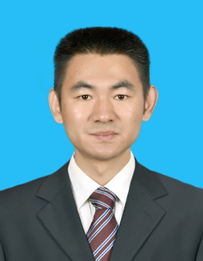
Prof. Min Ye
Chang'an University, China
Biography: Min Ye was the Dean of the School of Construction Machinery at Chang'an University. He serves as the Vice Chairperson for the China Construction Machinery Society and the Transportation Equipment Branch of the China Highway Society. He received the B.S. and M.S. degrees in mechatronic engineering from Chang'an University. He got a Ph.D. degree in mechanical engineering from Xian Jiaotong University. He was a visiting scholar at Michigan University, Dearborn, America, currently.
His research interests include energy-saving technology, the hybrid electric vehicle, which focuses on battery modelling, motor control and the application of mechanical-electrical-hydraulic technology in construction machinery. He was the Principal Investigator for over ten research grants, including the National Natural Science Foundation of China and more than 20 enterprise cooperation projects. He had authored over 70 SCIE-indexed IEEE trans and other top journal papers and two books in the area of energy saving, motor control, battery management systems, and construction machinery.
Speech Title: Research and Application of Digital Construction Technology for Highway Maintenance Equipment
Abstract: With the continuous increase in the scale of China's highway network, achieving the digital development of highway construction and maintenance equipment is the key to accelerating national infrastructure construction and promoting high-quality development of the transportation economy. Driven by big data, the Internet of Things, and artificial intelligence technologies, the transformation and upgrading of highway construction and maintenance equipment with digital twin technology as its core is an inevitable trend for the transportation industry to undergo intelligent and unmanned transformation. Based on the basic concept of digital twin equipment, this article explains the connotation and characteristics of digital twin technology for equipment level highway construction and maintenance equipment, and introduces typical practical scenarios of digital twin technology for current highway construction and maintenance equipment in terms of working condition division, efficiency optimization, and job quality control; On this basis, the challenges and key technologies faced by digital twin highway construction and maintenance equipment were discussed and anticipated, and a case study was conducted on the digital twin and on-site unmanned application of pavement thermal regeneration equipment.
Keynote Speaker Ⅱ

Prof. Wenxing Zhu
Shandong University, China
Biography: Zhu Wenxing is currently the Associate Dean of the School of Control Science and Engineering at Shandong University, a professor, and a doctoral supervisor. He serves as a member of the Teaching Steering Committee for Instrumentation Programs under the Ministry of Education, a senior member of the Chinese Society for Instrumentation, a member of the Education Work Committee of the Chinese Association of Automation, and a director of the Shandong Automation Society.
He has been selected as a Teaching Master of Ordinary Higher Education Institutions in Shandong Province and a National-Level Course Ideology and Politics Teaching Master, served as the head of the second batch of National First-Class Virtual Simulation Experimental Courses, and won the National Teaching Achievement Award Second Prize, Shandong Province Teaching Achievement Special Prize and First Prize, as well as the Shandong University Undergraduate Teaching Excellence Award.
As the first contributor, he has won the second prize of Shandong Provincial Science and Technology Progress Award and the first prize of Shandong Automation Society Science and Technology Award. He has presided over and undertaken more than ten research projects, including the National Natural Science Foundation, sub-projects of the National Key R&D Program, and provincial- and ministerial-level projects. He has published over 100 scientific papers, including more than 50 indexed by SCI, with 1 ESI highly cited paper, over 20 authorized national invention patents, and 3 international invention patents.
Speech Title: Car-Following Control System and Its Development
Abstract: This report mainly introduces the proposal and development process of the car-following control system theory. It is divided into four parts: the first part introduces microscopic car-following traffic flow modeling and its control factors; the second part discusses the control effects of external conditions, including uphill(downhill) roads, curves, and traffic signals, on vehicle platoon operation; the third part presents the classical compensation method and its control role in vehicle platoon operation; the fourth part introduces the theoretical system of the car-following control system and its current development status. Applying classical, modern, and discrete control methods to traffic flow control system is a new approach transitioning from classical car-following theory to autonomous vehicle car-following theory. It aligns well with the current development of autonomous vehicle technology and is in line with the trend and direction of future global technological development.
Keynote Speaker Ⅲ
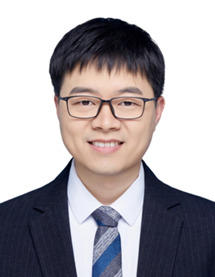
Prof. Jun Xu
Xi'an Jiaotong University, China
Biography: Jun Xu is a full professor, the Deputy Director of the Research Office at Xi'an Jiaotong University (XJTU). He is also the Vice Dean of the Xi'an Jiaotong University Institute of Robotics. He serves as an IEEE Senior Member, Chair of the Intelligent Robotics Branch of the Provincial Power Supply Society, and Deputy Secretary-General of the Provincial Robotics Industry Technology Innovation Alliance. He is selected as the World's Top 2% Scientists. He serves as Associate Editor for journals including Digital Twin and as Conference Chair/ Co-Chair for academic conferences such as IEEE ITECap. He has led over 30 research projects, including National Key R&D Programs and National Natural Science Foundation grants. His publications include more than 130 papers (6 ESI highly cited, over 100 as first author/ corresponding author), with over 20 authorized invention patents (multiple commercially transferred). He participated in 1 national standard, led 1 group standard development, and co-authored multiple standards. He has delivered over 20 invited conference presentations, including plenary, keynote, and special talks. As the primary contributor, he has led five research awards, including the Provincial Natural Science Award (Second Class) and the Inventor and Entrepreneur Award. As a key contributor, he has received multiple honors, including the Provincial Science and Technology Progress Award (Second Class) and four teaching achievement awards, such as the Provincial Teaching Achievement Award (Second Class). His primary research areas include robotics and electric vehicles.
Speech Title: Research on Efficient Thermal Management and Safety Monitoring for Lithium Battery Systems
Abstract: Electric vehicles have undergone rapid development. As the core component of electric vehicles, the safety of battery systems has garnered increasingly widespread attention. This report elucidates the conducted work and achieved outcomes in relevant areas, from design-phase safety prevention and control to usage-phase battery safety monitoring and protection. The contents include battery modeling, thermal management structure design, active thermal management control, fault detection, state estimation, etc.
Invited Speaker Ⅰ
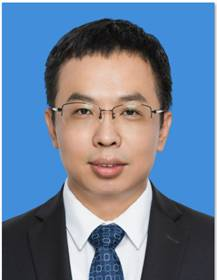
Prof. Zheng Chen
Kunming University of Science and Technology, China
Biography: Zheng Chen is a professor at Kunming University of Science and Technology, specializing in research on vehicle-road cooperative control and power battery management. He has been recognized with numerous prestigious honors, including the Young Talent of the National HighLevel Talent Support Program, Yunling Scholar of Yunnan Province's "Xingdian Talent Support Program," High-Level Overseas Talent of Yunnan Province, Bayu Chair Professor of Chongqing, Marie Curie Scholar of the European Union, and Fellow of the Institution of Engineering and Technology (IET). He has also been listed among the top 2% of scientists in Stanford University's "Lifetime Scientific Influence Ranking" and recognized as a Highly Cited Researcher in China by Elsevier. He has conducted over 50 projects and has published over 300 peer-reviewed journal papers and conference proceedings. His research interests include optimal control of connected and autonomous vehicles and intelligent management of lithium-ion batteries.
Speech Title: Reinforcement Learning-Based Cooperative Control for Connected and Autonomous Vehicles
Abstract: With the rapid advancement of intelligent vehicle technologies, decision-making and control methods based on single-agent systems face significant challenges in managing increasingly complex traffic environments. This presentation exploits cutting-edge methodologies for heterogeneous multi-agent collaborative learning, integrating reinforcement learning, distributed optimization, and system control theories. In multimodal and multi-source data environments, robust strategies are elaborated for achieving efficient communication, real-time data sharing, and collaborative control among various vehicles and infrastructures. By referencing widely recognized research findings and incorporating our latest work in optimal vehicle control, this presentation further elucidates the application of mature heterogeneous multi-agent reinforcement learning methods to enhance cooperative driving processes. Additionally, this presentation provides an extended discussion on architectural design, algorithm selection, and practical deployment, emphasizing reliability under uncertain operational conditions. Ultimately, this presentation aims to establish advanced heterogeneous multi-agent collaborative control strategies, fostering the development of an efficient, robust, and scalable ecosystem for heterogeneous autonomous vehicle collaboration.
Invited Speaker Ⅱ
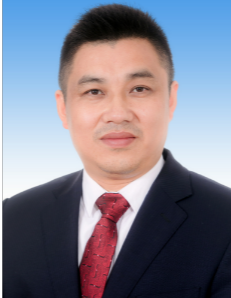
Prof. Maohua Xiao
Nanjing Agricultural University, China
Biography: Professor Xiao serves as Dean of the College of Engineering and Doctoral Supervisor at Nanjing Agricultural University. He has been selected for several prestigious talent programs, including the Jiangsu Provincial Young Scientific and Technological Talent Support Program and the Middle-aged and Young Academic Leader Program ("Qinglan Project") of Jiangsu Province.
He concurrently serves as Deputy Director of the Editorial Committee of the Chinese Society for Agricultural Machinery, Deputy Director of the Key Laboratory of Reliability Technology for Agricultural Machinery Power and Tillage Machinery (Ministry of Industry and Information Technology), Secretary-General of the Jiangsu Tractor Industry Technology Innovation Strategic Alliance, and an Appointed Expert of the "Science and Innovation China" National Agricultural Machinery Equipment Industry Service Group.
Professor Xiao has presided over more than 10 national and provincial-level research projects, including those funded by the National Natural Science Foundation of China, the National Key R&D Program, and the National Major Project on Key Agricultural Technologies. He has published nearly 70 papers indexed by SCI/EI, obtained 11 authorized invention patents and over 30 software copyrights, with two patents successfully transferred into industrial application.
He has received five provincial and ministerial-level awards, including the First Prize of the National Agriculture, Animal Husbandry and Fishery Harvest Award and the First Prize of the China Agricultural Machinery Science and Technology Award. Professor Xiao also participated in the development of China's first multi-link high-speed ultraprecision press and the first high-power tractor hydro-mechanical continuously variable transmission (HMCVT). Moreover, five of his developed products have been recognized as "First (Set) Major Equipment Products of Jiangsu Province."
Speech Title: Energy-saving and Stability-enhancing Control for Unmanned Distributed Drive Electric Plant Protection Vehicle based on Active Torque Distribution
Abstract: The distributed drive electric plant protection vehicle (DDEPPV), equipped with a unique fourwheel independent drive system, demonstrates excellent path-tracking capability and dynamic performance in agricultural environments. However, during actual field operations, issues such as severe tire slip, poor driving stability, high rollover risk, and excessive energy consumption often arise due to improper torque distribution. This study proposes an energy-efficient and stabilityenhancing control method based on active torque distribution, aiming to improve both operational safety and system efficiency. A hierarchical control architecture is adopted: the upper-level controller employs a nonlinear model predictive control (NMPC) to achieve coordinated control of steering and yaw moment, enhancing lateral stability and ensuring operational safety. The lowerlevel controller implements a direct torque allocation method based on an adaptive-weight multiobjective twin delayed deep deterministic policy gradient (AW-MO-TD3) algorithm, enabling joint optimization of tire slip ratio and energy consumption. Real-vehicle tests were conducted under two typical field conditions, and the results show that compared with conventional methods, the proposed strategy significantly improves key performance metrics including tracking accuracy, vehicle stability, and energy efficiency. Specifically, stability was enhanced by 29.1% and 41.4%, while energy consumption was reduced by 19.8% and 21.1% under dry plowed terrain and muddy rice field conditions, respectively. This research provides technical support for the intelligent control of distributed drive electric agricultural vehicles.
Invited Speaker Ⅲ
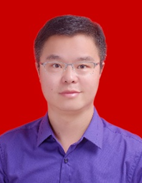
Prof. Hui Pang
Xi'an University of Technology, China
Biography:
Positions & Memberships
· Director, Vehicle Control and Simulation Laboratory (VCSL), School of Mechanical and Instrumentation/Precision Instrument Engineering, Xi'an University of Technology
· Member, Chinese Society of Automotive Engineers (CSAE)
· Committee Member, Technical Committee on Vehicle Control and Intelligence, Chinese Association of Automation (CAA)
· Member, SAE International
· IEEE Member
· Expert Reviewer, National Natural Science Foundation of China (NSFC)
· Committee Member, Special Committee on Artificial Intelligence and Agricultural Robotics, Chinese Society of Agricultural Engineering
Research Areas
· Intelligent vehicle dynamics; by-wire chassis control
· Power battery/supercapacitor management for NEVs
· Dynamics and motion control of mobile robotic systems
· R&D of intelligent agricultural vehicles and robots
Projects & Outputs
· PI: 10+ projects at national, provincial/ministerial, and industry levels
· Publications: 70+ papers (30+ in SCI Q1/Q2); 3 ESI Highly Cited (Top 1%)
· Inventions: 12 patents (8 granted)
· Software Copyrights: 5
Student Awards (Advisor)
· National discipline competitions: 10+ First Prizes, 8 Second Prizes, and 20+ Third Prizes
Honors & Distinctions
· Selected for the 2025 "World's Top 2% Scientists" lifetime list.
Speech Title: V2X-Based Energy-saving Control for Autonomous Vehicle Queue: Simulation and Test Validation of the MADDPG
Abstract: For the longitudinal and lateral cooperative control problem of autonomous vehicle queue in path tracking scenarios under complex environments, with a focus on energy saving, a multi-agent Deep Deterministic Policy Gradient (MADDPG) algorithm is proposed based on the autonomous vehicle queue longitudinal and lateral cooperative control system in this paper. Firstly, to decouple the longitudinal and lateral motion control tasks critical to path tracking and energy efficiency, MADDPG is used to control the longitudinal and lateral motion of the following cars separately. Longitudinal control ensures speed and inter-vehicle spacing align with path constraints, while lateral control guarantees accurate adherence to the target path trajectory. This design enables different agents to explore the environment space independently, focusing on their respective pathrelated and energy-saving control objectives such as lateral deviation correction for trajectory tracking or longitudinal speed adjustment for safe and energy-efficient path following. Secondly, a time-step action reward mechanism is introduced, tailored to path tracking performance and energy efficiency. It penalizes excessive deviations, rewards precise speed matching and smoother control actions, avoiding abrupt movements, cutting instantaneous high energy consumption and boosting response speed and stability. Additionally, V2X technology enables the system to obtain real-time key road and traffic flow information such as gradient, curvature, speed limits, traffic light timing, preceding vehicle speed and inter-vehicle spacing. The MADDPG longitudinal agent utilizes these data to proactively plan an optimal energy-saving speed profile adapting to upcoming conditions. Finally, comparative experiments targeting path tracking scenarios such as "S"-shaped curved paths are designed to show that the MADDPG-based autonomous vehicle queue control system exhibits better path tracking accuracy, higher security by maintaining safe inter-vehicle spacing throughout path following, stronger efficiency by minimizing speed and trajectory adjustment delays, and superior energy-saving performance over the multi-agent Deep Q-Network (MADQN).
Invited Speaker Ⅳ
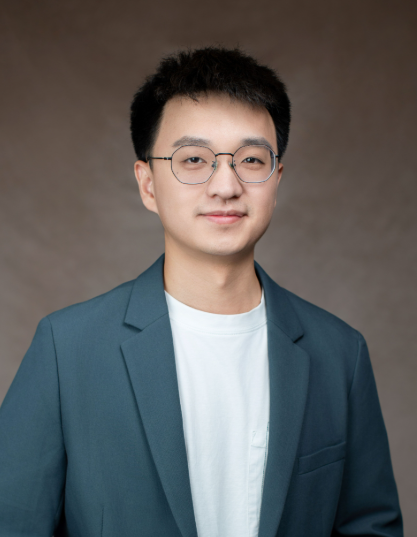
Asst. Prof. Jie Li
Guangxi University, China
Biography: Jie Li received his Ph.D. through a joint training program between Chongqing University and Cranfield University in the UK and is currently an Assistant Professor in Guangxi University. He was selected as a cultivation candidate in the first cohort of the Guangxi Association for Science and Technology Youth Talent Support Program (2025). He has led or participated in eight research projects, including the National Natural Science Foundation of China (Youth Program) and the Guangxi Natural Science Foundation (Youth Program). He also serves as a member of the China Society of Automotive Engineers, a senior expert of the Guangxi Artificial Intelligence Association, and a key researcher at the Guangxi Key Laboratory of Power Batteries and Green Power Systems for New Energy Vehicles. He has received several awards, including the High-Level Academic Poster Award at the 3rd Academic Forum for PhD Students of the China Society of Automotive Engineers, the National Graduate Scholarship, the "Tang Lixin" Scholarship of Chongqing University, the Bronze Award in the CVCI 2022 Benchmark Competition, and the Third Prize in the National New Energy Vehicle Big Data Innovation and Entrepreneurship Competition. His main research interests include optimization and control of energy-efficient driving systems for new energy vehicles, and key technologies for optimal control of hybrid vehicle powertrains.
Speech Title: Predictive Eco-cruising Strategy with Considering of random Cut-in Events
Abstract: With the continuous advancement of automated vehicle technologies, eco-cruising control strategies have shown significant potential for energy savings. However, the interference from random cut-in events greatly affects both the safety and energy efficiency. To address the influence of cut-in vehicle on eco-cruising control strategies, this paper proposes a trajectory prediction-based eco-cruising control strategy, which explicitly accounts for cut-in maneuvers from adjacent lanes based on a twolayer framework. The upper layer utilizes a neural network to predict the lane-changing trajectories of adjacent vehicles, while the lower layer employs a model predictive control framework combined with the quadratic programming algorithm to achieve the optimal speed trajectory control. Simulation results demonstrate that, compared to conventional eco-cruising control strategies, the proposed method improves energy efficiency from 0.51% to 17.95% in cut-in scenarios without compromising travel efficiency.
Invited Speaker Ⅴ
Dr. Yitao Wu
Shaoyang University, China
Biography: Mr. Yitao Wu received the B.S. and M.S. in vehicle engineering, from Kunming University of Science and Technology, Kunming, China, in 2017 and 2020, respectively, and received the Ph.D. degree in vehicle engineering with Chongqing University, Chongqing, China. He is the receiver of second place of IEEE VTS Motor Vehicles Challenge in 2018. Now he is a lecturer at the College of Mechanical and Energy Engineering, Shaoyang University. His research interests include optimal control of hybrid electrified powertrain and eco-diving for intelligent connected vehicles.
Speech Title: Research on Eco-Driving Control for Intelligent Connected PHEVs in Multi-Lane Complex Urban Environment under Dynamic Slope Conditions
Abstract: With the increasing severity of environmental pollution and energy crises, major energy-intensive industries have begun technological innovation and industrial upgrading toward low-consumption and low-carbon development. In the automotive sector, the transition to new energy vehicles is particularly critical. Plug-in hybrid electric vehicles (PHEVs), as a significant category of new energy vehicles that combine long-range capabilities with low energy consumption, have attracted extensive attention for their energy optimization technologies. However, PHEV powertrains exhibit multisource complex coupling characteristics and dynamic interactions with complex driving environments. Existing energy optimization methods face challenges such as adaptive enhancement under hybrid driving conditions, economic efficiency improvement in dynamic road environments, and breakthroughs in energy-saving bottlenecks under multi-vehicle influences. Therefore, we focus on plug-in hybrid electric vehicles, targeting urban traffic characteristics with dual objectives of energy economy and traffic efficiency, and conducts systematic energy optimization research for complex urban environments.
Invited Speaker Ⅵ
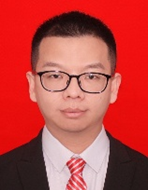
Assoc. Prof. Ningyuan Guo
Foshan University, China
Biography: Ningyuan Guo, Ph.D., IEEE senior member, received the Ph.D degree in mechanical engineering from the School of Mechanical Engineering and Vehicle, Beijing Institute of Technology, Beijing, China, in 2022. He is currently an Associate Professor with the School of Mechanical and Electrical Engineering and Automation, the Key Laboratory of Industrial Inspection of Guangdong Province, and the Advanced Robotics Research Center of Guangdong Province, Foshan University, China. His research interests include energy-saving control of connected vehicles, vehicle dynamics control, robot planning and control, etc. He has published more than 40 SCI/EI papers, including 18 SCI/EI papers as the first/corresponding author (16 in JCR Q1 and Q2, and 2 highly cited ESI paper). He serves as a reviewer for more than 100 SCI/EI journals in the vehicle field. He gained the world's top 2% scientists in 2024 and 2025(released by Stanford University) and the top 0.5% scholars of lifetime and prior five years in the "Electric Vehicle" field of ScholarGPS. He has won the 2022 Best Paper Award of the China SAE journal Automotive Innovation, the second place of IEEE VTS Motor Vehicle Challenge (twice), the Outstanding Doctoral Dissertation of Beijing Institute of Technology, and so on. He has presided over 5 projects and participated in a series of national and defense projects.
Speech Title: Predictive Energy Management and Eco-driving Optimization for Connected Hybrid Electric Vehicles
Abstract: This presentation focuses on energy management in hybrid electric vehicle (HEV) powertrains and eco-driving, aiming to resolve the challenge of balancing optimization performance and computational efficiency in control systems. It first introduces co-state-bounds-guided predictive energy management methods through two cases: combining PMP with fuel-cell electric vehicles (FCEVs) to derive KKT condition-satisfying analytical boundaries for a real-time strategy and developing a model-approximation-free method to determine universal equivalent factor boundaries for a real-time predictive ECMS strategy. Next, it proposes a continuous modeling method for the nonlinear optimization of FCEV's predictive energy management across fuel cell and battery lifespans, paired with a real-time optimization approach based on the modified C/GMRES algorithm. Additionally, for eco-driving with multi-traffic-light and slope considerations, it presents a green-window optimization method to expand feasible domains and an improved iterative linear quadratic planner for real-time speed curve optimization, ensuring traffic compliance and energy efficiency with high computational speed. All methods offer high efficiency and optimal results, providing theoretical and technical support for advanced coordinated energy management in connected HEVs.